Seasonal balance: Spring
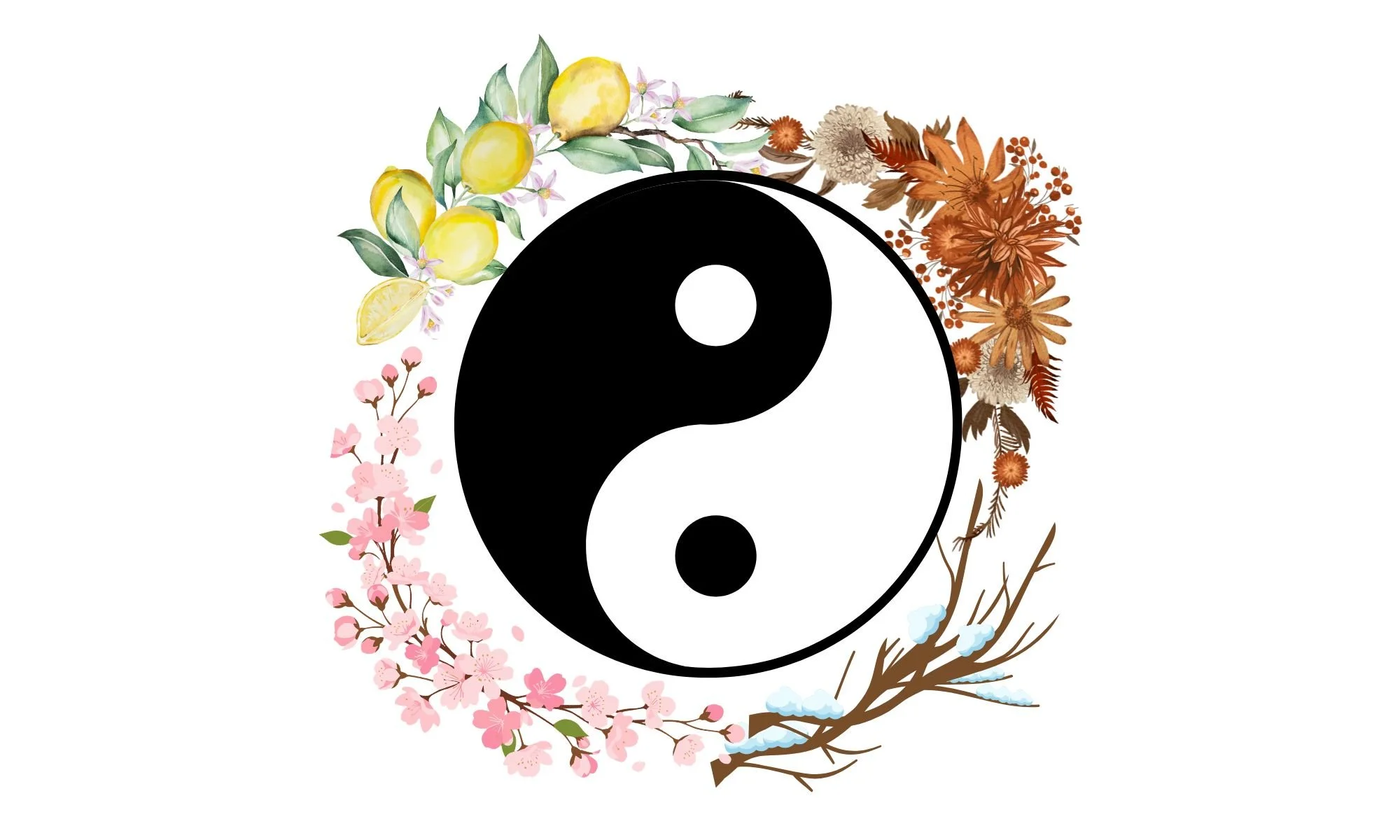
The yin yang symbol represents balance: everything exists in relation or contrast to something else and is part of the whole. Seasonal balance artwork by Natalie Rossiter.
Balance - the holy grail of health. A subjective, ephemeral, elusive state that we all aspire to.
As someone interested in a variety of holistic, psychological and spiritual approaches to mental health I’ve come to notice that there is something that everything I’ve encountered - so far - has in common: the belief that balance = health. What that balance looks like or how it’s achieved will vary between modalities and belief systems, but whether you’re an ecologist, botanist, psychiatrist, yoga teacher or social worker we all seem to agree that balance is key.
I find this very reassuring and helpful. However, just because something seems simple doesn’t mean it’s easy. The concept of balance can be deceptive in its simplicity and one can, paradoxically, become overwhelmed at trying to achieve it.
In these seasonal articles I’ll share some insights and guidance on how you can consider what a balanced life looks and feels like for you at different times of year or even seasons of your life.
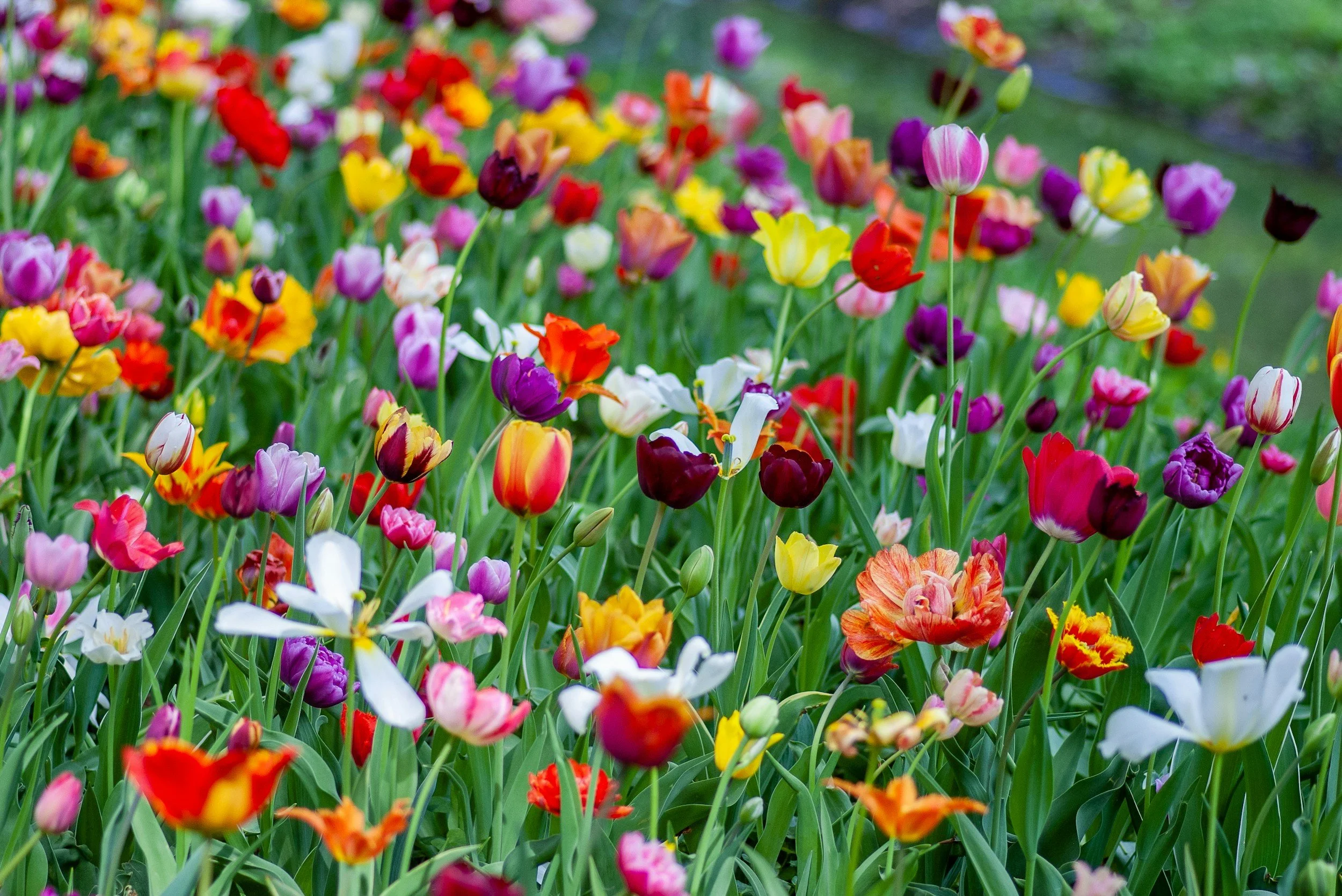
“Ten thousand flowers in spring, the moon in autumn,
a cool breeze in summer, snow in winter.
If your mind isn't crowded with unnecessary things, this is the best season of your life.”- Wu-men
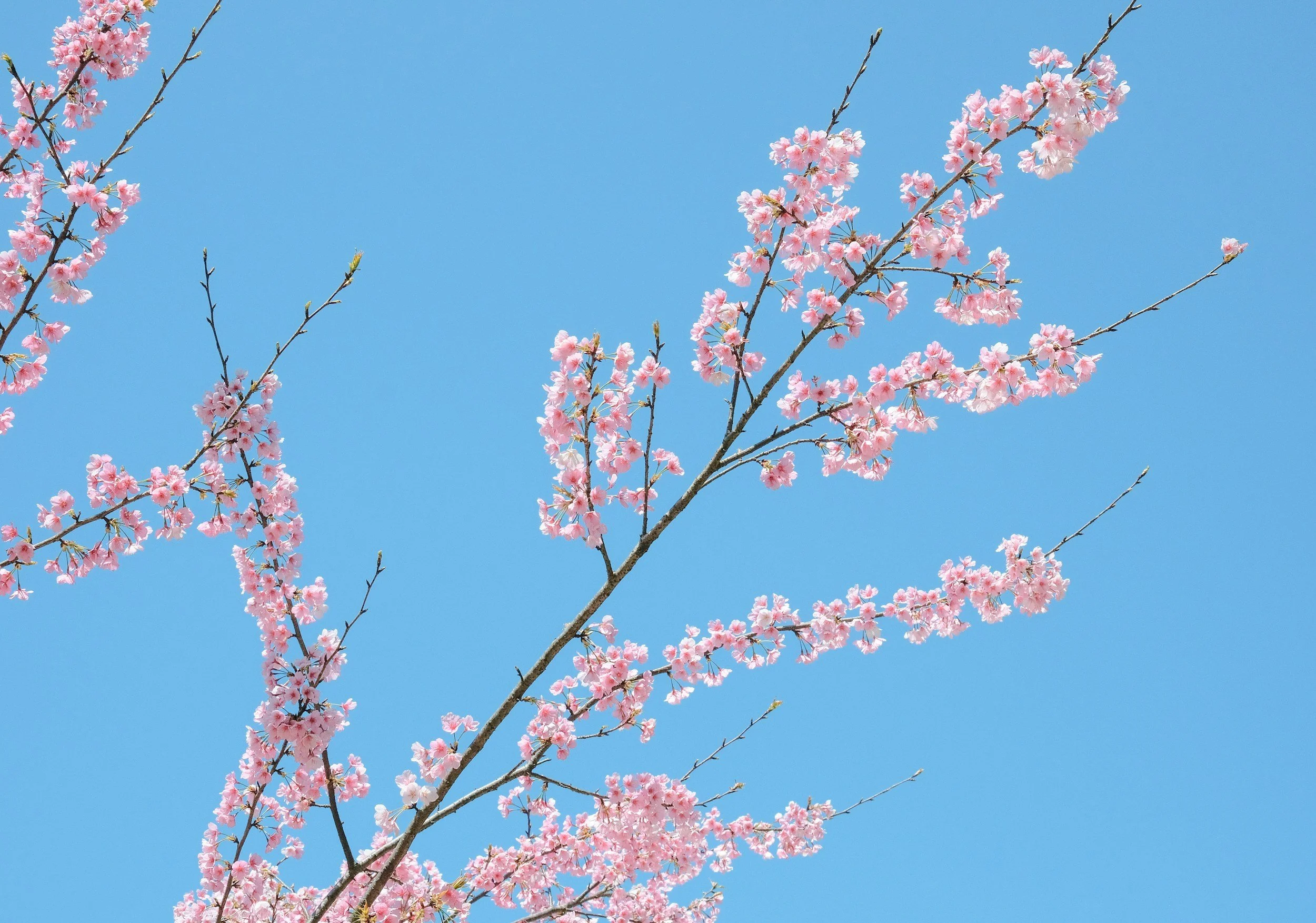
The joy of Spring
Spring is a time of new life, growth and energy. Buds appear, the crocuses push up through the hard earth, followed by cheery daffodils then joyful cherry blossom. A re-greening occurs as the natural world wakes up and the sun stretches out the days. The Spring blooms are undeniably a delight and the season is a symbol of hope and renewal in most cultures. We are part of nature, and the season awakens us too; we get a boost of energy and motivation, perhaps have some ideas and start to implement them, we do a ‘Spring clean’, maybe eat some different foods, do something creative, be more physically active, spend more time outside and want to be a bit more social. These are generalisations of course, everyone has their own preferences and stuff going on, but when you live seasonally for a few years or more, building a relationship with the rest of nature, you notice that what’s happening in the trees, plants and animals outside reflect a shift within your own mind and body too.
What can imbalance us
It’s a favourite season for many; we emerge groggy from winter’s gloom into the sunlight with relief and anticipation. However, within this lies the potential for imbalance - too eager for action we might overdo it and get overwhelmed or burned out. If the season also comes with a feeling of anxiety or resistance for you, you’re not alone, and this feeling is probably trying to warn you that too much too soon is, indeed, too much.
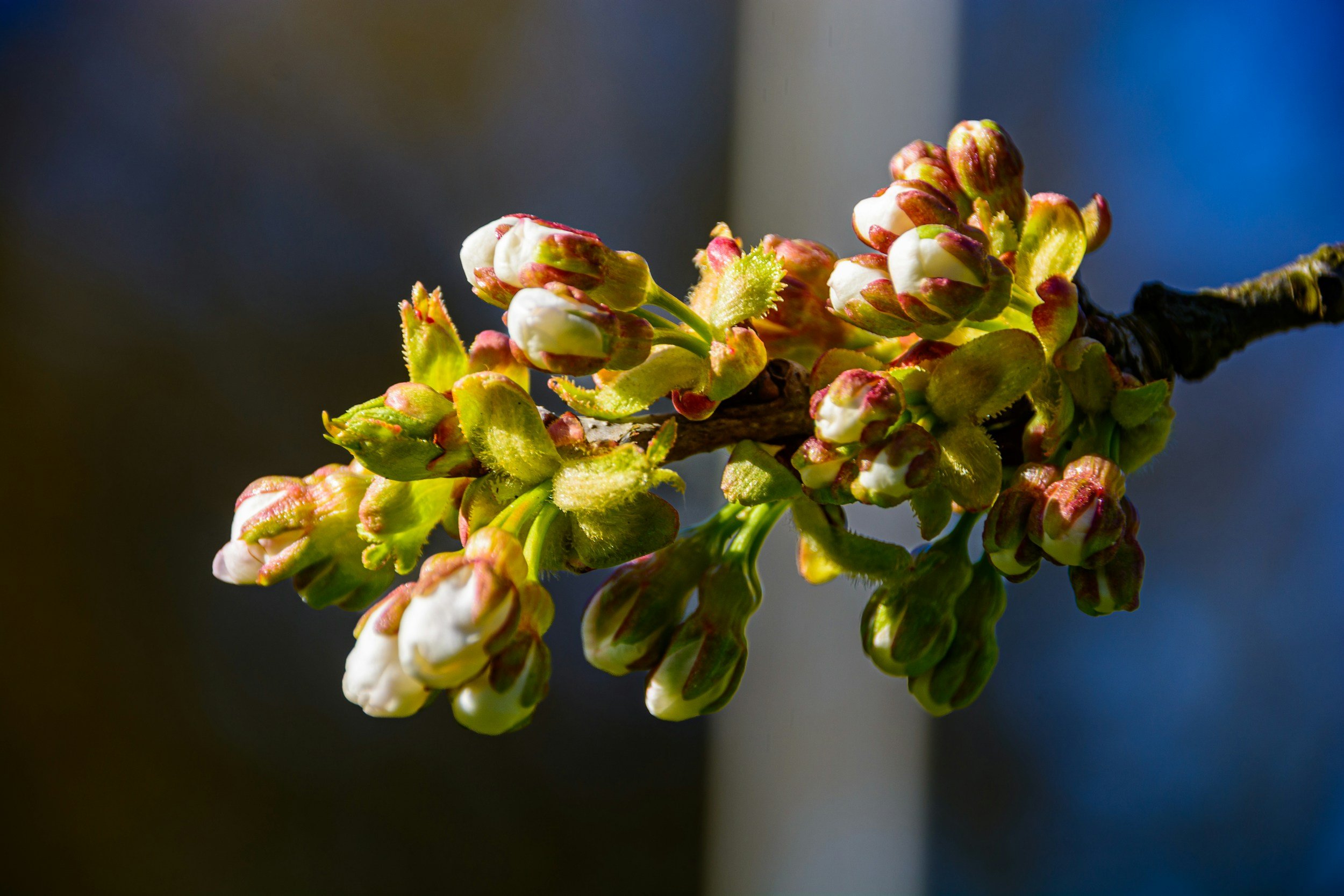
Seasonal shifts happen gradually. If you take a look at the trees each day during spring you’ll notice the buds slowly unfurling, with different trees coming into leaf at vastly different times depending on their type, position, age, the weather etc. Flowers that bloom too early are taken out by a sudden frost or become leggy and weak because they grew too quickly. We are no different. To last the year and be fruitful we must take it slowly.
If we’ve seen Winter as our time to rest we may assume that now the Spring has arrived we must burst into a continuous productivity. This is black and white thinking, fed by the incessant demands of capitalism, and needs some nuance to be more accurate and helpful.
Balance in Spring: grounded and growing:
In Qigong, an ancient movement and energy balancing practice, Spring is the season of Wood, which is fed by Water (Winter’s element) and kept in check by Metal (Autumn’s element). The energy is rising but needs to remain grounded and boundaried to avoid becoming chaotic and unbalanced.
The message is to embrace the new energy, but not let it become overgrown; to contain both the upward momentum of the season and a rooted, stillness at the same time. Again, think of a tree that is well anchored in the ground, able to withstand strong winds and absorb many nutrients, whilst also reaching up towards the sky to soak up the light, spreading its branches to just the extent it needs, and no further.
But we are human, not trees, so we must find our way of embodying balance in this season of energy and expansion.
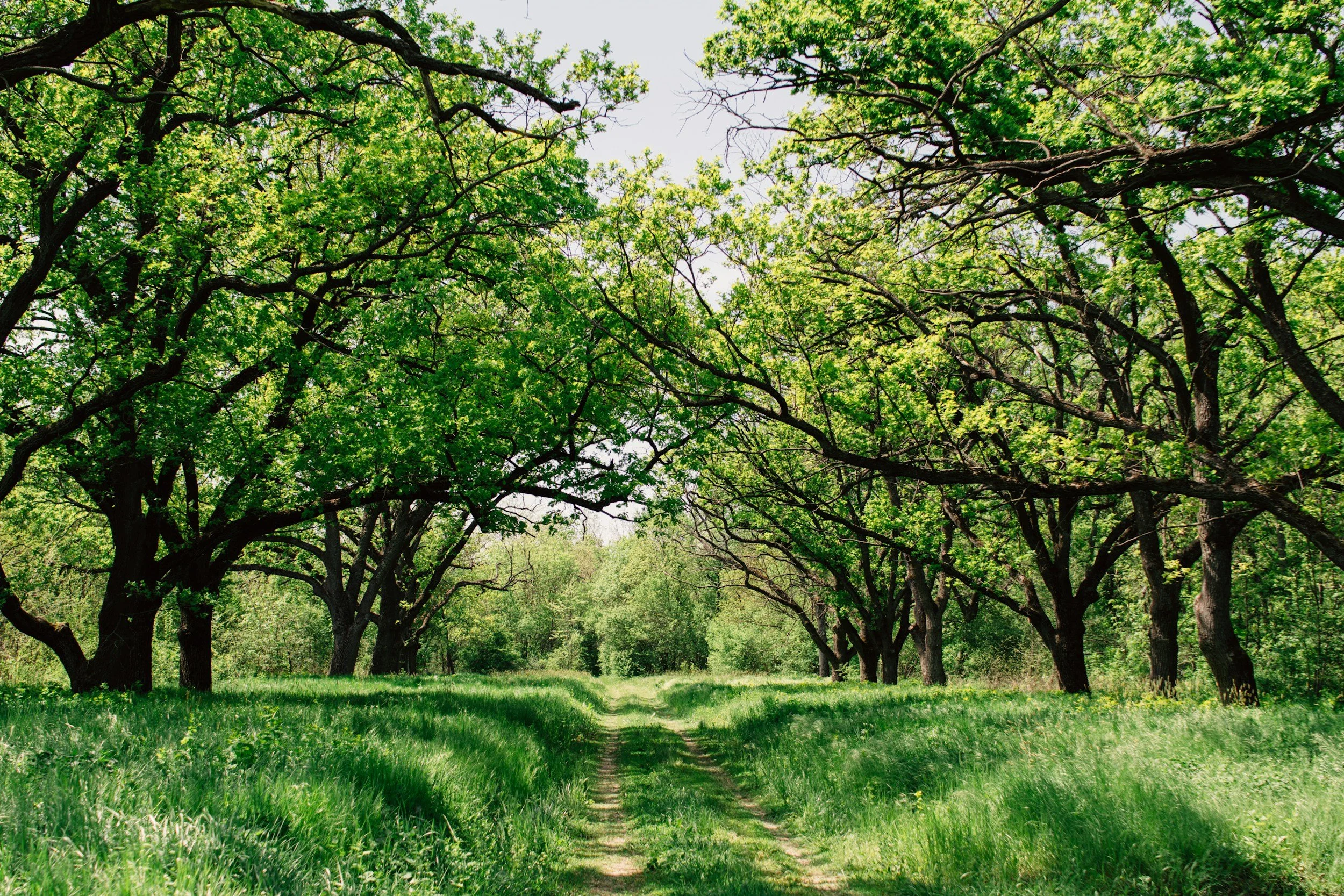
Some ideas for a more balanced Spring:
1. Set intentions for the season, ideally around the Spring Equinox but there’s no limit as to when this can be useful. Being clear on what matters to you will help you direct your energy mindfully and avoid stress/burnout. Maybe take a walk in nature where you can think clearly, and consider what’s important to you over the next few weeks and months. Try not to think too far ahead, just about the current season, and be realistic in your plans. Here’s some suggestions:
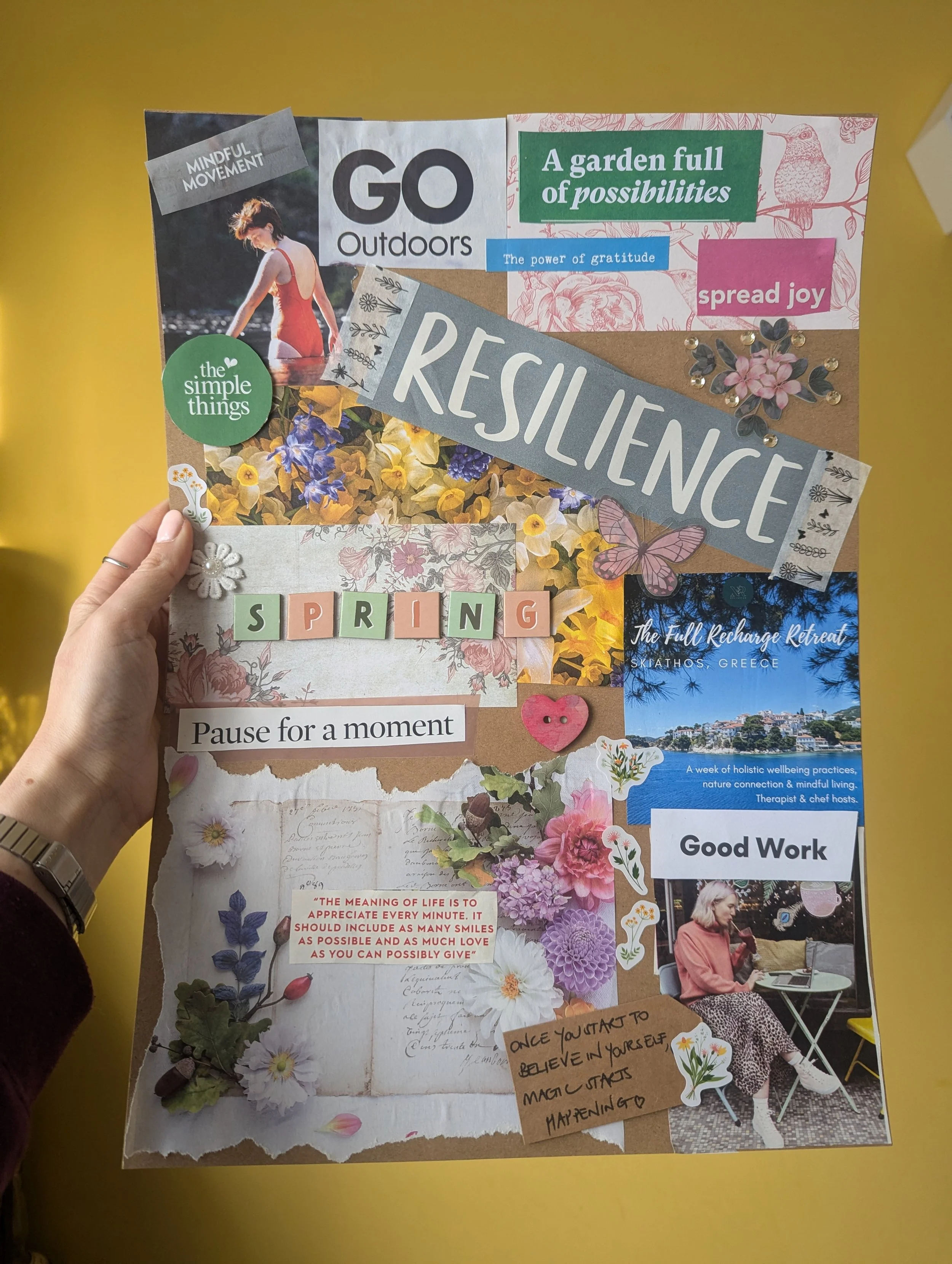
Make a vision board (I do this on my seasonal mini retreats) - this is a lovely way to capture images, symbols and words that you want to focus on. Looking at it often affirms your intentions and keeps your goals in your conscious minds, making you more likely to achieve them.
Journaling - after your walk and contemplation, write down your thoughts about what you need this season and where you want your focus to be. Consider what needs to change from the winter and the direction you want to grow - what will help you do this? You can find my Ostara and Beltane journal prompts on my website.
2. Be intentional and proactive about grounding & resting. What helps you feel calm? Maybe this is different in Spring than it was in Winter. Maybe you add in more after work walks now the light allows for it, or you might take your exercise class outside or change the time of it, or do a different type of movement altogether. Perhaps you like to read, or garden, or nap.
When you feel clear on what you need to feel grounded, don’t just rely on remembering this: plan it in. Block out time in your diary for resting. Schedule the meet ups with friends and family before your workload builds up. Get your yoga mat/new book/gardening gloves ready for when you need them.
Rest is so much more than just sleep or binging Netflix on the sofa. There are 7 different types of rest and therefore many ways in which we can recharge. Spring is a time of productivity, making and doing - so balance this with things like meditation, slow crafts (focusing on the process not just the end product) and stillness (e.g. sipping your morning tea in the garden).

3. Recognise when to slow down. It’s easy to get carried away with the joys of Spring and accidentally say yes to too many things or take on too much work. Balance requires constant adjustment and fine tuning, so don’t make the mistake of seeing as a destination than once you’ve arrived at you can let slip from your mind.
Check in regularly with yourself - how are your energy levels? Are you feeling restless and could do with a bit more movement and challenge (more yang needed)? Or are you getting weary, stressed and overwhelmed (more yin needed)?
Know your stop signs and catch them early. If you have a garden or houseplants, ideally you’ll notice a leaf tip has gone brown and water the plant before the whole thing dries up and dies. Or if you have a dog you’ll notice when they’re getting uncomfortable and take them for a walk before they wee on the carpet or chew your slippers. We want to pay the same attention to ourselves and give the same care; know the signs that you need some TLC and tend to this before it becomes a bigger problem. It’s a lot easier to take a nap, make a cuppa and sit in the garden or cancel that extra event now than have a total meltdown in a week or twos time. These, I’m afraid, are often the lessons we learn the hard way!
Don’t try and do it all. Spring can have a very excitable energy, like a puppy or young child, that can make us grabby, hectic and overambitious. The ephemeral nature of plants like cherry blossom can induce an existential panic, creating unnecessary urgency and spikes of anxiety. Try to trust that you have time to do what’s important and that whatever you achieve will be enough. Steady pacing, and the grounding/rest practices already mentioned, are vital to even out the urge to surge forward.